EVUNIA editorial · Prepared 2026-10-23 · Published October 23, 2026
EVUNIA · BUYING GUIDE
Why Does a Wig Tangle at the Nape? Check Before Pulling
The nape is a contact area: hair at the back of a wig can rub against your neck, clothing or a chair. Check those contacts and the wig’s care instructions before pulling through a knot. Friction is one possible contributor, not a diagnosis of every tangle, and repeated harder brushing is not a useful test of whether a new wig is faulty.

1. Identify the location and the repeated contact
Look at the location before choosing a remedy. Is the knot confined to the underside at the back, spread through the ends, or close to the cap? When did you first notice it: before wearing, after a particular outfit, or following a care step? Keep those observations separate. They describe what happened without claiming that the collar, the fit or the product alone caused it.
In its detangling guide, Wigs.com identifies necklaces, some shirt collars and contact with seats as possible sources of friction around the nape. For a wig you already wear, inspect your usual combination rather than buying a spray first. Note a high collar, a necklace or a chair back that repeatedly meets the same area. If you change an optional accessory, keep the rest of the routine consistent so that you can describe the difference; one easier day is not a controlled test or a guarantee.
Before buying for a routine with frequent contact at the back, ask about care for the exact option and the amount of handling you are willing to do. Aurora with Golden Mixed Layers selected lists a 16-inch length. That specification helps identify the cut; it does not establish where its ends will fall on your body, how often it will tangle, or whether another length is maintenance-free. A model photograph cannot answer those questions for you.
2. Follow the care method, with a clear stopping point
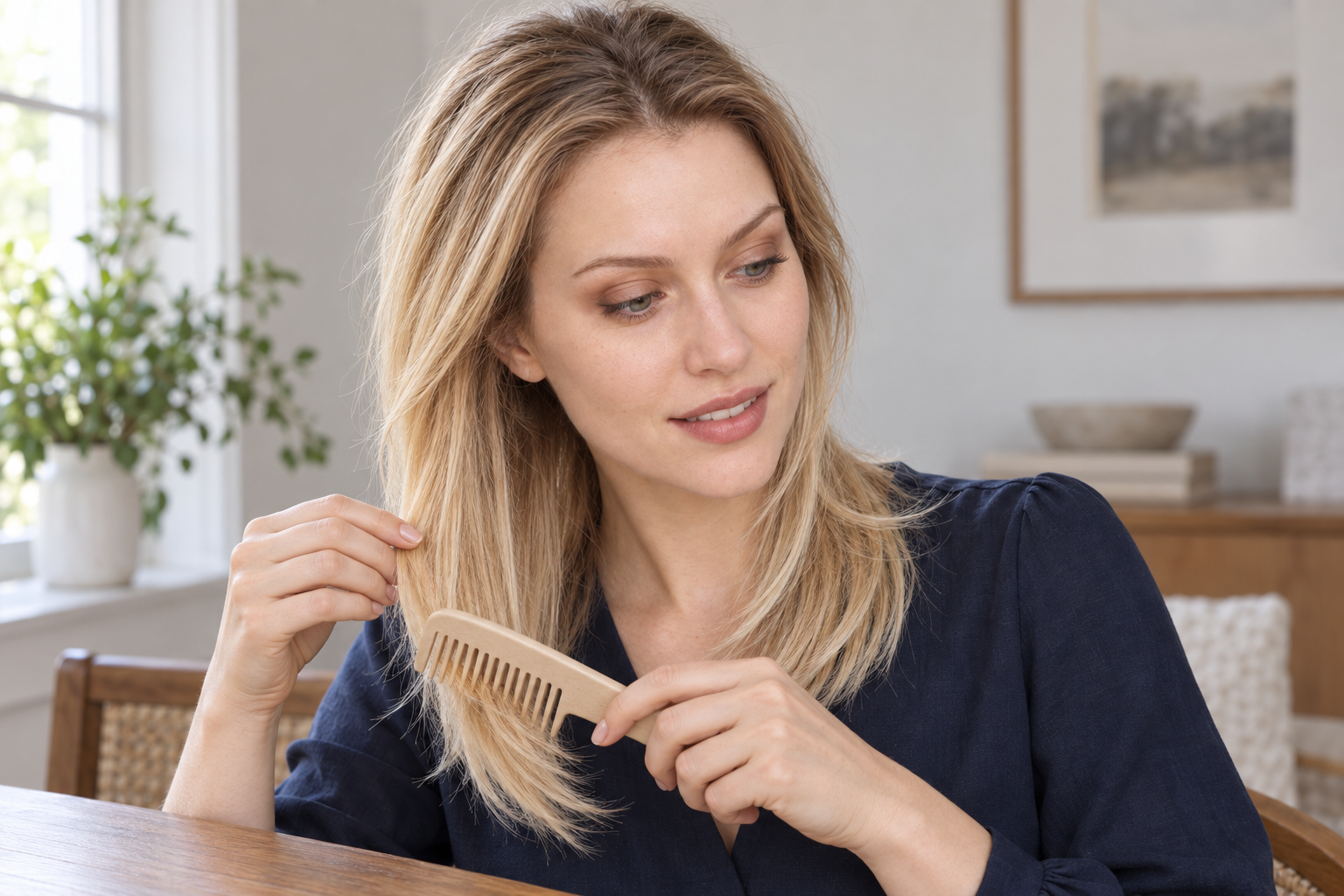
Aurora’s current care instructions say to detangle gently from the ends upward. When following the instructions for your own wig, support a small section above the area being worked on and begin at the free ends instead of dragging a comb down from the cap through resistance. Clear a manageable section before moving higher. Use the tool and any care product approved for that wig; a recommendation for a different construction or care routine is not automatic permission. The comb-selection guide covers that separate decision.
Stop if a compacted area will not separate gently, or if continuing would pull on the base or attachment. Photograph the location and keep the selected option, tool, product names and care sequence together for the seller or a wig professional. Do not cut into the mat or improvise with steam, a hot tool or a household mixture while the method is unresolved. The retailer reference discusses several techniques; EVUNIA’s linked instructions call for gentle care and air drying and do not establish a steam-repair method.
If a new item arrived tangled, keep the packaging and document its condition before washing, adding a product or altering it. EVUNIA’s return policy treats an incorrect or defective item separately from a voluntary change-of-mind return; contact the store with the order reference and photos for an assessment. A visible knot alone does not prove a defect, and applying an unconfirmed treatment can make the original condition harder to assess. For an established wearing routine, record when the problem recurs rather than repeatedly pulling through it.